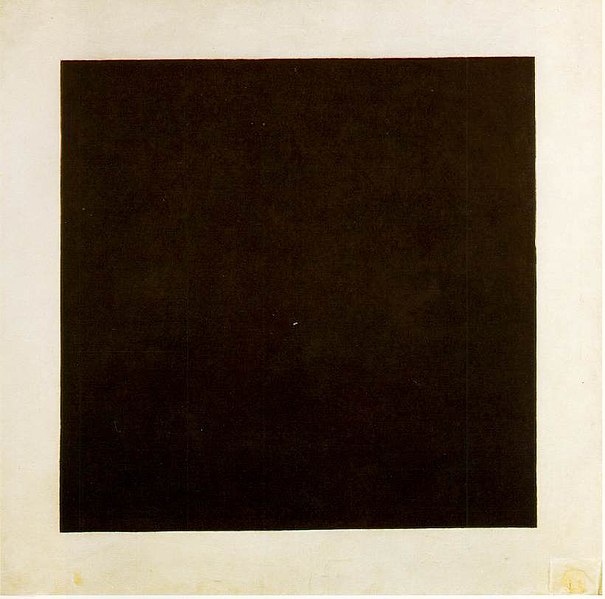
At first glance the work of Kazimir
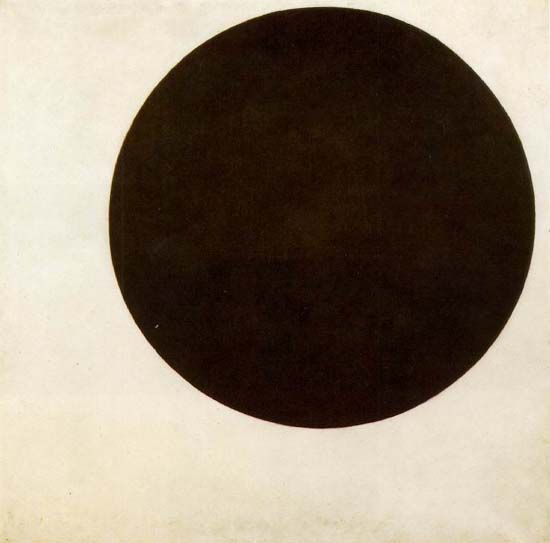
Malevich seems to be simple, though his black square and black circle for example, are
prime examples of suprematist design. Based on basic geometric shapes in various
colours, suprematist design, which was founded by Malevich, focused on the
“primacy of pure feeling in creative art” rather than the depiction of visual
objects. Malevich believed that art could exist on its own without having anything “to do with the object, as
such”.
The simplicity of the forms might seem superficially to be similar to constructivist works, down at the core, their beliefs were in sharp contrast. Suprematism embodied a profoundly anti-materialist, anti-utilitarian philosophy. Reflecting the social changes that were going on in Russia at the time, going from a Tsarist monarchy to the Soviet state run by First Lenin and finally Stalin who restricted the artists of the
The simplicity of the forms might seem superficially to be similar to constructivist works, down at the core, their beliefs were in sharp contrast. Suprematism embodied a profoundly anti-materialist, anti-utilitarian philosophy. Reflecting the social changes that were going on in Russia at the time, going from a Tsarist monarchy to the Soviet state run by First Lenin and finally Stalin who restricted the artists of the

No comments:
Post a Comment