The popularity of the Art Nouveau movement
at the turnoff the 19th century can be traced back to Czech artist,
Alphonse Mucha. With a lithographed poster advertising the play Gismonda, that
appeared on walls in Paris in1895, Mucha and his distinctive style were in the
minds of the French public, and soon the movement spread, though it acquired
different names depending on the country. In Prague for example, the style was
incorporated into the local architecture and buildings designed in those years
are still visibly encrusted with images of leaves and women that swirl across
the facades. The movement was influenced by Japanese art, like wood block
prints with their curves and use of colours, and similarities can be seen not
in style as much as the techniques that were absorbed.
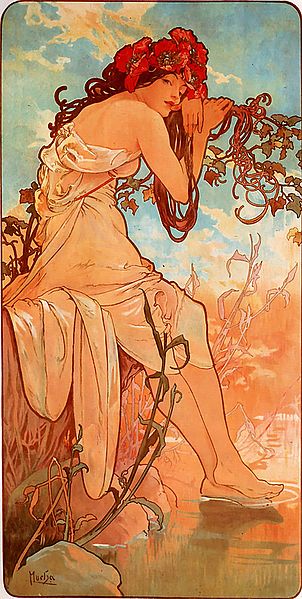
Art Nouveau was a short
lived style, succumbing in the years leading up to the first world war, as it
was one that explored sexuality as well, and this subversiveness and disregard
for morality andsocial structure contributed to its downfall.Monday, May 13, 2013
Malevich
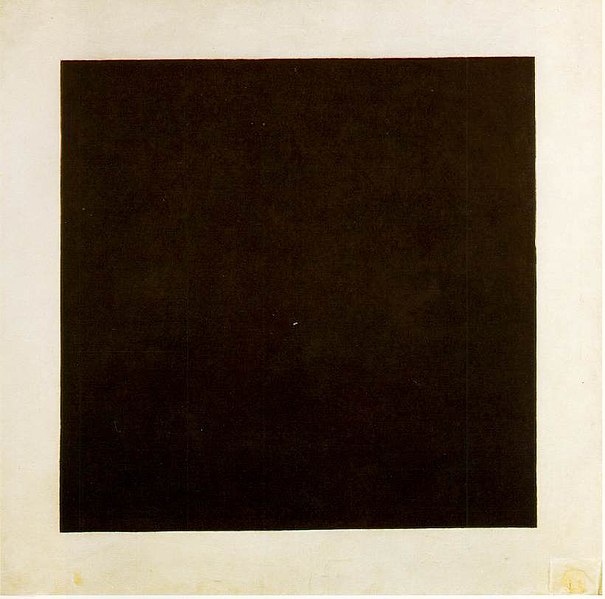
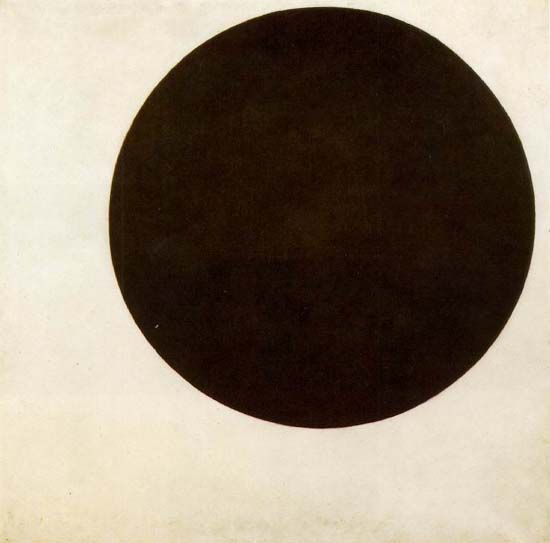
At first glance the work of Kazimir
Malevich seems to be simple, though his black square and black circle for example, are
prime examples of suprematist design. Based on basic geometric shapes in various
colours, suprematist design, which was founded by Malevich, focused on the
“primacy of pure feeling in creative art” rather than the depiction of visual
objects. Malevich believed that art could exist on its own without having anything “to do with the object, as
such”.
The simplicity of the forms might seem superficially to be similar to constructivist works, down at the core, their beliefs were in sharp contrast. Suprematism embodied a profoundly anti-materialist, anti-utilitarian philosophy. Reflecting the social changes that were going on in Russia at the time, going from a Tsarist monarchy to the Soviet state run by First Lenin and finally Stalin who restricted the artists of the
time in fear of their power. In
Malevich’s self portrait, painted traditionally according to Stalinist cultural
policy, Malevich still signed it
with a tiny black on white square defiantly.The simplicity of the forms might seem superficially to be similar to constructivist works, down at the core, their beliefs were in sharp contrast. Suprematism embodied a profoundly anti-materialist, anti-utilitarian philosophy. Reflecting the social changes that were going on in Russia at the time, going from a Tsarist monarchy to the Soviet state run by First Lenin and finally Stalin who restricted the artists of the
Ludwig Mies van der Rohe
It takes work and talent to create
minimalist designs that stand the test of time. One designer capable of such
work was German-American architect Ludwig Mies van der Rohe. Now widely
regarded as one of the pioneers of modern architecture, he began his career as
an apprentice in Peter Brehren’s studio, working alongside esteemed modernists
Walter Gropius and Le Corbusier. After World War 1, he began experimenting with
styles of design that were suitable for the industrial age that the world was
embracing.
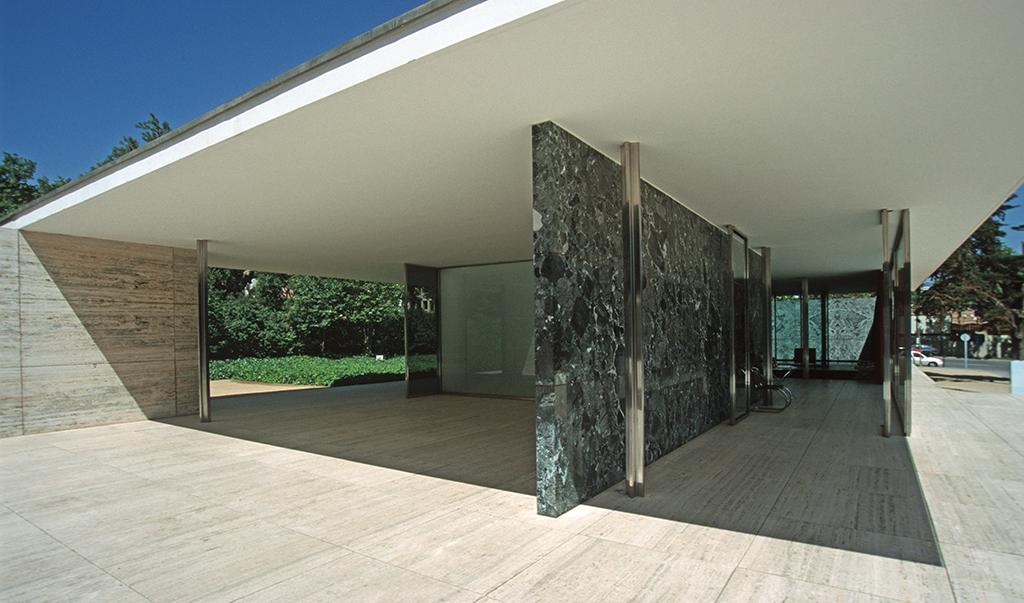
He is most widely known for the design of
the German Pavilion for the Barcelona International Exposition in 1929, using
simple forms and extravagant materials. It was supposed to reflect the face of
the new Germany after the war, culturally progressive, prospering and
thoroughly pacifist. The use of space was meant to invite the weary visitors
and blurred the distinction between inside and outside space. Unfortunately,
since it was never meant to be a permanent installation, it was torn down less
than a year later. However, thanks to Copies of the original plans and
photographs, a group of Spanish architects have reconstructed it more
permanently between 1983 and 1986. It now stands as a testament to the
ingenuity and talent of a great modernist designer, always welcoming.
Olly Moss
The wonderful creations of Olly Moss an English
artist, graphic designer and illustrator, have been floating around the
internet for a while, garnering attention from people with an eye for simple
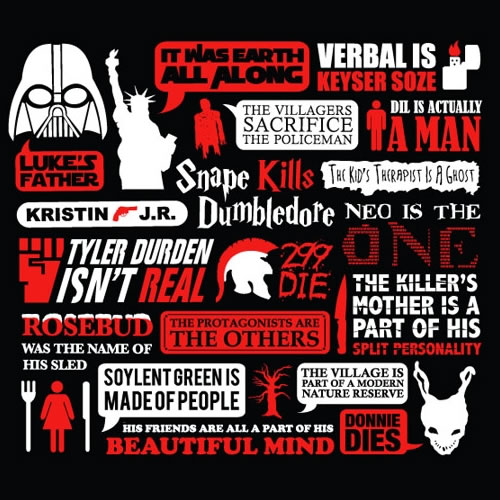
movie posters that encapsulate and capture their essence. Moss is new to the
professional graphics scene, having graduated from the University of Birmingham
in 2008, but he started designing tshirts for sale while studying and first
made a stir when he won a tshirt design contest with a design that spoiled the
major plot twists of famous movies.
Since then, he has gone on to design more t-shirts,
movie posters and has even had a show at Gallery 1988 in Los Angeles. Paper
cuts as it was titled, collected pop culture icons from movies and games as
well as comics and reproduced them in the style of Victorian portraiture.
Here and there a splash of colour stands out to emphasize some part of the character,
like the smile of the Joker from Batman. Moss’s work has been likened to that
of Saul Bass, and he pays homage to him in some pieces, as well as Romek
Marber, whose work he has riffed on for some of his video game posters, Justin
Ishmael, Mondo’s creative director (who commissioned most of the movie posters)
thinks “he has a lot more range. Only Moss does Moss.” (2011)
Banksy
The artist using the
pseudonym Banksy is famous for his anti establishment, anti-government
stencil street art. His works frequently critique and bring to light
the object oriented culture of modern society like in his piece Shop Till You Drop (Sa//y, 2011)
Depicting a woman
falling or being dragged down by a shopping cart, it brings to light the
rampant consumerism and spending in a time when it is at
best questionable due to the economic situation in England.
Another of his works protested
the fact that much of the Jubilee and 2012 Olympic memorabilia had been made
in sweatshops, often by underpaid and underfed children. This sort of
exploitation of the poor in the name of capitalism is nothing new, but in the
past when it had come to light, such as with Nike in the 1990's protests were
organizes and products had been boycotted until they took a closer look at
their manufacturing. In recent times, Apple has come under fire for its factories
in China where a number of suicides and terrible working conditions had come to
light. The truth is that today, people would rather closet themselves with
their gadgets than acknowledge the pain and suffering that is a byproduct and
so something to change it.
Reference
Sa//y. (2011) Shop Till You Drop. Flickr. [Online] Available at: http://www.flickr.com/photos/salsgallery/6417876715/in/photostream/ (Accessed 12 May 2013)
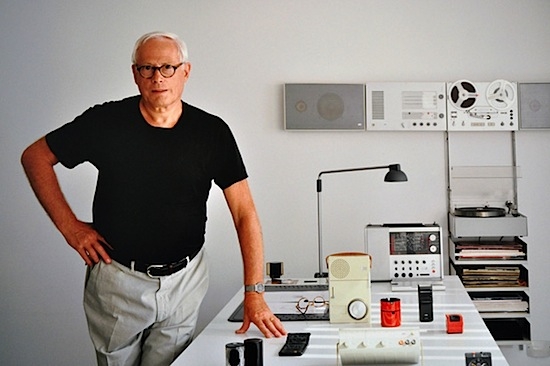
Dieter Rams
The man that made Braun a household name in the 1950's,
Dieter Rams (Desgn Museum, 2009) is a designer that has greatly influenced today's world by way of
both his products and his design philosophy.
At the core, Rams' designs are created with one main idea, Less is More. Rams asked himself "is my design a good design?" and the result of reflection on this was his Ten Principles of Good Design.
Good Design
is innovative
makes a product useful
is aesthetic
makes a product understandable
is unobtrusive
is honest
is long lasting
is thorough down to the last detail
is environmentally friendly
is as little design as possible
is innovative
makes a product useful
is aesthetic
makes a product understandable
is unobtrusive
is honest
is long lasting
is thorough down to the last detail
is environmentally friendly
is as little design as possible
Rams was dissatisfied with the way product design was
progressing in the 1970's and that is why he introduced the ideas of
sustainable development and of the manufacturing and design of products to be
environmentally friendly. These are ideas that modern designers are still
coming to grips with, 40 years later, and not always succeeding.
Rams has acknowledged that Apple are one of the few companies that follow his principles, and he is cited as an influennce both for product design as well as a key influence to their chief designer Sir Jonathan Ive.
Reference
Design Museum 2009 Dieter Rams [Photograph]
Jony Ive
London born designer Sir Jonathan Ive (Dawes, 2012) is one of the names
any self respecting design student should know, not only because the products
he designs that are used every day, or the many awards and accolades he has
won. The way he designs things, with an attention to detail and with the goal
of concentrating and simplifying the essential elements of a design without
limitations.
Ive's work is the subject of much love and hate, go on any
computer forum and take a peek at the flame wars his products create. This
reaction from the public as well as his talents mark him as one of the great and
influential designers of the 21st century. After all is it not a hope of the
designer to spark feelings in the hearts and minds of the people?
His position as Senior Vice President of Industrial Design at Apple is another thing
that sparks hope for the future of design in this world of shoddily assembled
products planned with obsolescence in mind.
Apple now being a household name and Ive's association with its rise prove that design is an important part of any process and that companies should take note if they want to be as successful.
Reference
Dawes, M. (2012) Sir Jonathan Ive [Online]. Availoable at: http://marcusdawes.photoshelter.com/image/I00006Ts4_FCMxZI (Accessed 12 May 2013)
Shakespeare and Language
The last hundred odd years have seen the greatest shift in
culture, technology and language arguably since the beginning of written
language. With this change, languages
have evolved and mutated, sometimes within years , the meanings of words shifting with
generations. One example of such a word is gay. If we look at its original
meaning and associations, for example in Shakespeare's Richard II the usage is
obvious in its referencing fun, cheerful, colourful, even exciting clothing,
compared with that of a poorer person.
"My gay apparel for an almsman's gown" (1595, 3.3:1791)
By the late
1890's the term had an overall tinge of promiscuity, and in the late 1940's the
term began to appear in psychological writing such as the Rorschach Research
Exchange and Journal of Projective Techniques, published in 1947.
Since then, the
word entered use in mainstream English and has been recognized as having
several meanings in dictionaries. Now in the 21st century, with the advent of
the internet, overuse of the word gay has shifted its meaning yet again, mostly
among the youth, though it still retains its homosexual meaning. The present
use, usually used to describe objects or events in slang indicates something
rubbish or stupid, as in "that bike is gay".
Reference
Shakespeare, S. (1595) Richard II. Edited by Wright, W.A. Cambridge: Macmillan and Co.
Modernist Furniture
While the era of modernist design has passed, proponents of
its austere principles as well as products designed by them are still readily
apparent in today's world. Modernist furniture designs have had a great effect
on what is available today for the average consumer, as designs clearly
influenced by modernist designs such as Marcel Breuer's Nest of Tables are for
sale today.
![]() |
| Marcel Breuer's B9 Nest of Tables designed in 1925/26 |
| Annika Grottell's KLUBBO Nesting Tables |
While modernist design might have been a bit too stark for
some, the nature of the materials used had given the objects produced a certain
tenacity and longevity, and as such, examples of modernist furniture, like the
creations of Ray and Charles Eames are much sought after even today, fetching a
pretty penny on the market.
Reference
Breuer, M. (1925/26) B9 Nest of Tables
Grottell, A. KLUBBO Nesting Tables
Mississauga City Hall, Postmodernist Architecture
Postmodernisms rejection of the serious attitude of
modernism can be linked to the end of World War 2 and the culture shift that
took place in the following decades. The end of the war saw the rapid expansion
of the middle class, thanks to the momentum of the economy and the rise of new
buildings to accommodate them. However the modernist approach of one size fits
all to urban design meant that when times got worse, they degenerated into
slums and had to be torn down in some cases.
While modernist architecture was serious and monolithic,
postmodern architects took a more playful outlook, and revived some of the more
decorative design choices that had been minimized or even rejected by modernist,
such as using columns and decorative facades purely for their beauty. They
still used the materials that modernists had celebrated, steel and glass, but
used them in such a way as to make buildings more aesthetically pleasing to the
everyday man.
![]() |
| Ian Muttoo, 2007 |
Some building almost seem to poke fun at the seriousness,
such as Mississauga City Hall in Ontario, Canada. This melding of European
urban civic design and the rural styles of farmhouses stands tall and is a
physical manifestation of the postmodernists rejoicing in diversity.
Reference
Muttoo (2007) Mississauga City Hall. Flickr [Online]. Available at: http://www.flickr.com/photos/imuttoo/2229840972/ (Accessed 12 May 2013)
Useless Machines by Bruno Munari
Bruno Munari's "useless machines" show off one
facet of the designers many talents in design, but they are unique his and are
one thing he is remembered for.
![]() |
| Bruno Munari, Useless Machine (Arrhythmic Carousel), 1953, Iron structure, gramophone mechanism and aluminium sheets, 113 x 60 x 30 cm. |
Freeing geometric shapes from their static role in pictures or on canvas,
Munari cut them out, painted them and displayed them using basic materials such
as wood and string. Similar to childrens mobiles, and often used as such by his
friends, these designs were a celebration of design being a part of life,
something active, in motion, and the way Munari designed them makes this clear.
Everything was balanced according to geometric rules so that the slightest
touch of air would send the objects spinning and create delightful shapes and
shadows, that varied with the lighting used as well.
![]() |
| Bruno Munari, Useless Machine , 1947 |
Whether the machines could be truly called useless is
debatable, though Munari admits that the word useless was chosen because the
machines didn't produce any goods, eliminate labour or increase capital (Munari,
B, 2009).
On the other hand though, the reactions they produce, while not physically
tangible is one of pleasure and enjoyment simply in the ever changing art that
they produce out of interaction with their environment.
Reference
Munari, B. (2009) Design as Art, London: Penguin Group UK.
Munari, B. (1947) Useless Machine, Private Collection
Munari, B. (1953) Arrhythmic carousel, Private Collection
Subscribe to:
Comments (Atom)